 Bearlywild
Hiking
Lake Louise, Lake Agnes and the Little Beehive: Beat the Crowds, Skip the Ice
October 14, 2024
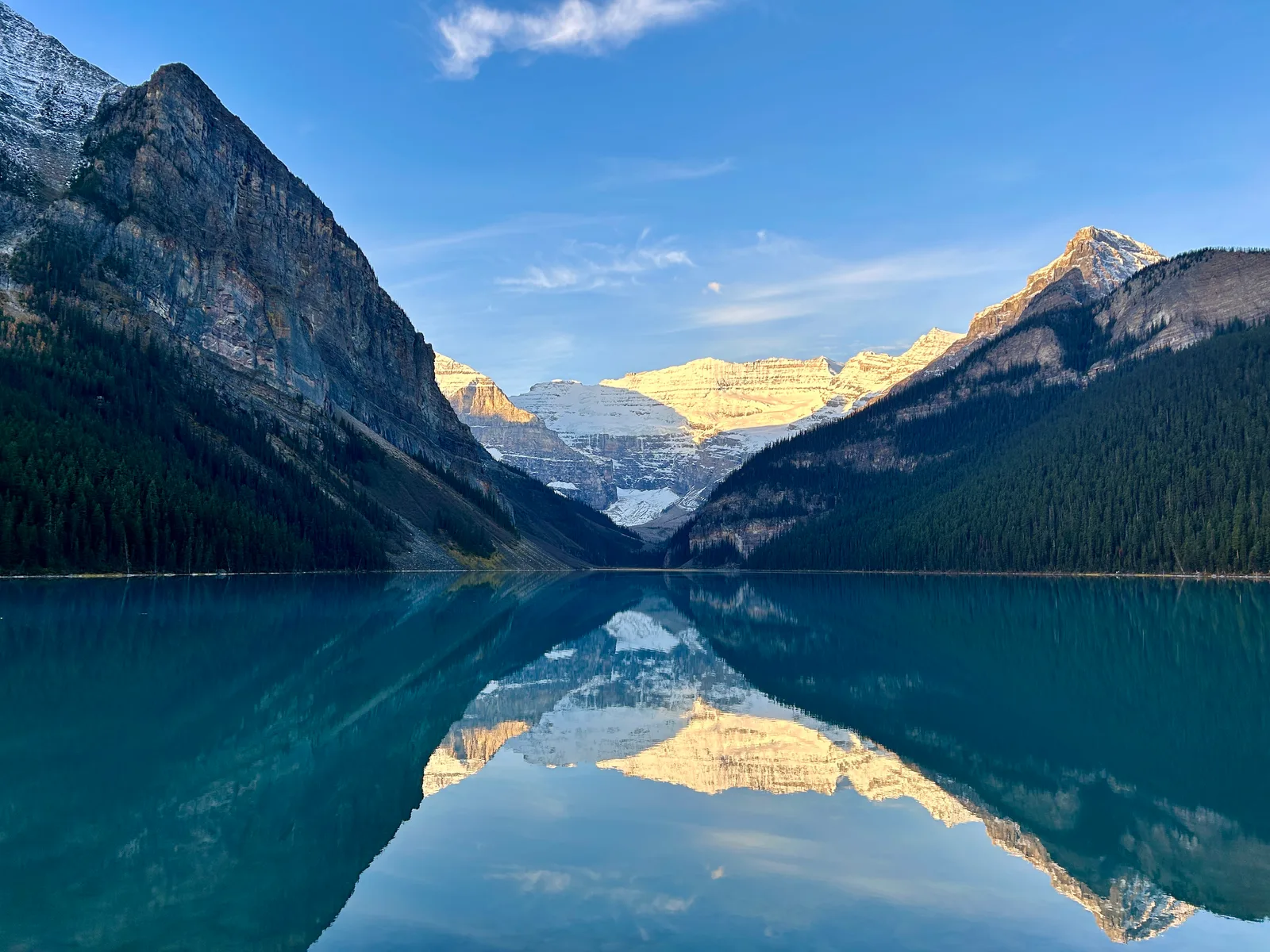
It's been almost two years since our first time at Lake Louise, one of the most photographed lakes in the world and usually for a reason involving several hundred other people in the frame with you. We got up early to beat that, and it worked. We were at the lakeshore by 8:39am, one degree out, bluebird sky, sun just starting to hit the peaks across the water. No crowds yet. I got a shot of the lake completely empty, which is not a thing you normally see in Lake Louise photos.
Getting there
Banff National Park sits in the Alberta Rockies, about 128 km (80 miles) west of Calgary. It's one of the world's most-visited UNESCO-recognized parks, alongside Yellowstone, Grand Canyon, Serengeti, Plitvice Lakes, and the Great Barrier Reef, which is a big part of why the shuttle and permit system below exists in the first place. The town of Lake Louise is a further 40 minutes (60 km, 36 miles) west of Banff on the Trans-Canada Highway.
We stayed at a hostel in Banff with a private bathroom, at a genuinely good price. We've been back to the area several times since and found better value basing out of Canmore instead. It's worth cross-shopping both towns rather than assuming Banff itself is the only option.
During the shuttle season (mid-May to early/mid-October), you can't just drive up and park at the Lake Louise lakeshore: the lot is tiny, fills before sunrise, and paid parking there (when it's actually available) runs around $42/vehicle/day. In practice, plan on the shuttle. Free parking is available instead at the Lake Louise Park & Ride, at the Lake Louise Ski Resort (1 Whitehorn Rd, Lake Louise, AB T0L 1E0). This is where the Lake Louise and Moraine Lake shuttles depart from. (A separate "Alpine Start" shuttle to Moraine Lake leaves from the Lakeshore parking lot on Lake Louise Drive instead, a different pickup point, so don't mix them up.)
We got to the Park & Ride around 7am for our booked 7–8am departure window, and there were already a lot of people and buses lined up. We booked with relatively short notice and still got a seat. That was the very last day of the shuttle season, though, so don't count on that kind of availability in July or August. Parks Canada releases seats in two waves: about 40% on opening day (mid-April, 8am MT) and the rest on a rolling 48-hours-ahead basis. Book as early as you can for peak season. We paid $19 total for two adult tickets plus the reservation fee in October 2024; check the reservation site for current fares, since they change.
Permits & access
You need a Banff National Park pass to enter (checked at the park gates). It covers the vehicle, not each person individually, as long as you buy the day group/family rate rather than paying per adult. As of 2026, that's roughly $24.50/day for up to 7 people in one vehicle (or $12.25 for a single adult pass). See the official fees page. Parks Canada occasionally waives entry fees for limited windows (a free-admission promotion ran June 19–Sept 7, 2026, for example). This changes year to year, so check the Banff National Park page for current conditions rather than assuming free entry.
If you're visiting multiple parks or staying several days, the annual Discovery Pass can be worth it: it covers 80+ national parks, historic sites, and marine conservation areas for 12 months from the month of purchase, at roughly $83.50/adult or $167.50/family (2026 pricing). It tends to break even around 7–8 single-day visits for a family/group (fewer if you're also stopping at National Historic Sites along the way), but run the math for your own trip since it depends on group size.
The Lake Louise/Moraine Lake shuttle reservation is separate from the park pass. You need both; neither substitutes for the other.
The route
From the lakeshore, the Lake Agnes trail starts near the boathouse and climbs steadily through forest: switchbacks, a moderate grade, nothing technical. It's 3.7 km one-way to Lake Agnes, and it took us about an hour, gaining roughly 380 m.
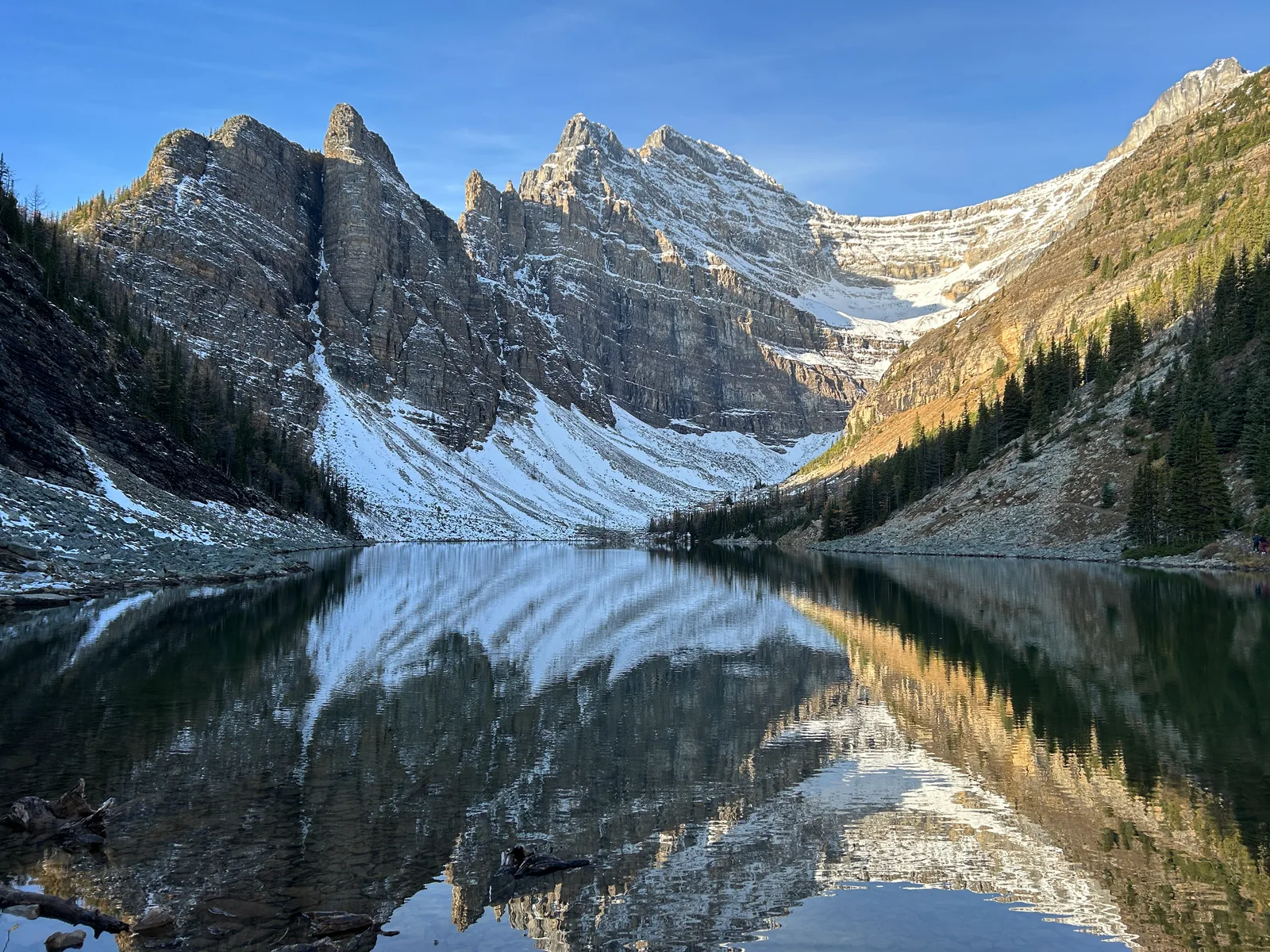
At Lake Agnes there's a historic cabin that serves tea and food in season. We got no tea. It turns out the Lake Agnes Tea House closes for the year in early October (roughly June 4 through the first week of October, 8am–4pm in season), and we showed up October 14th, right past the window. If a hot drink at the top matters to you, go before the first week of October; don't count on it as a food or water stop any later in the season.
We saw people walking the far shore toward a steep trail up the Big Beehive, so we followed. That was our mistake. Once we hit the steepest section, we ran into real snow and ice. It was mid-October, at elevation, and it caught us completely off guard. We hadn't packed microspikes. We tried to push through anyway, started sliding, and it got genuinely dangerous fast. We turned around.
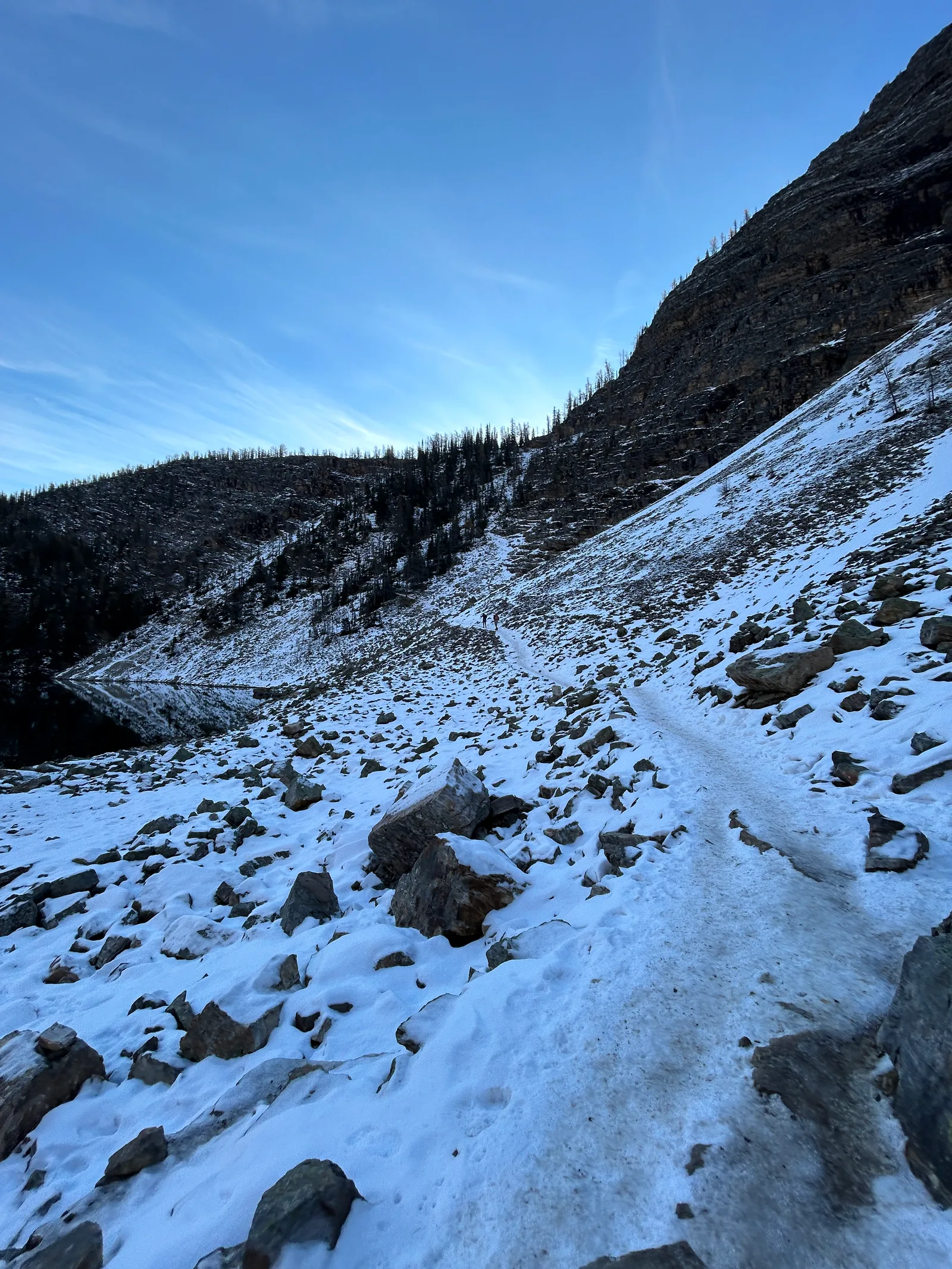
It was a good, uncomfortable reminder that alpine conditions can flip from a mild, sunny morning at the lake to winter footing a few hundred metres higher. Worth planning for even on a trail that looks mellow from the trailhead.
The payoff
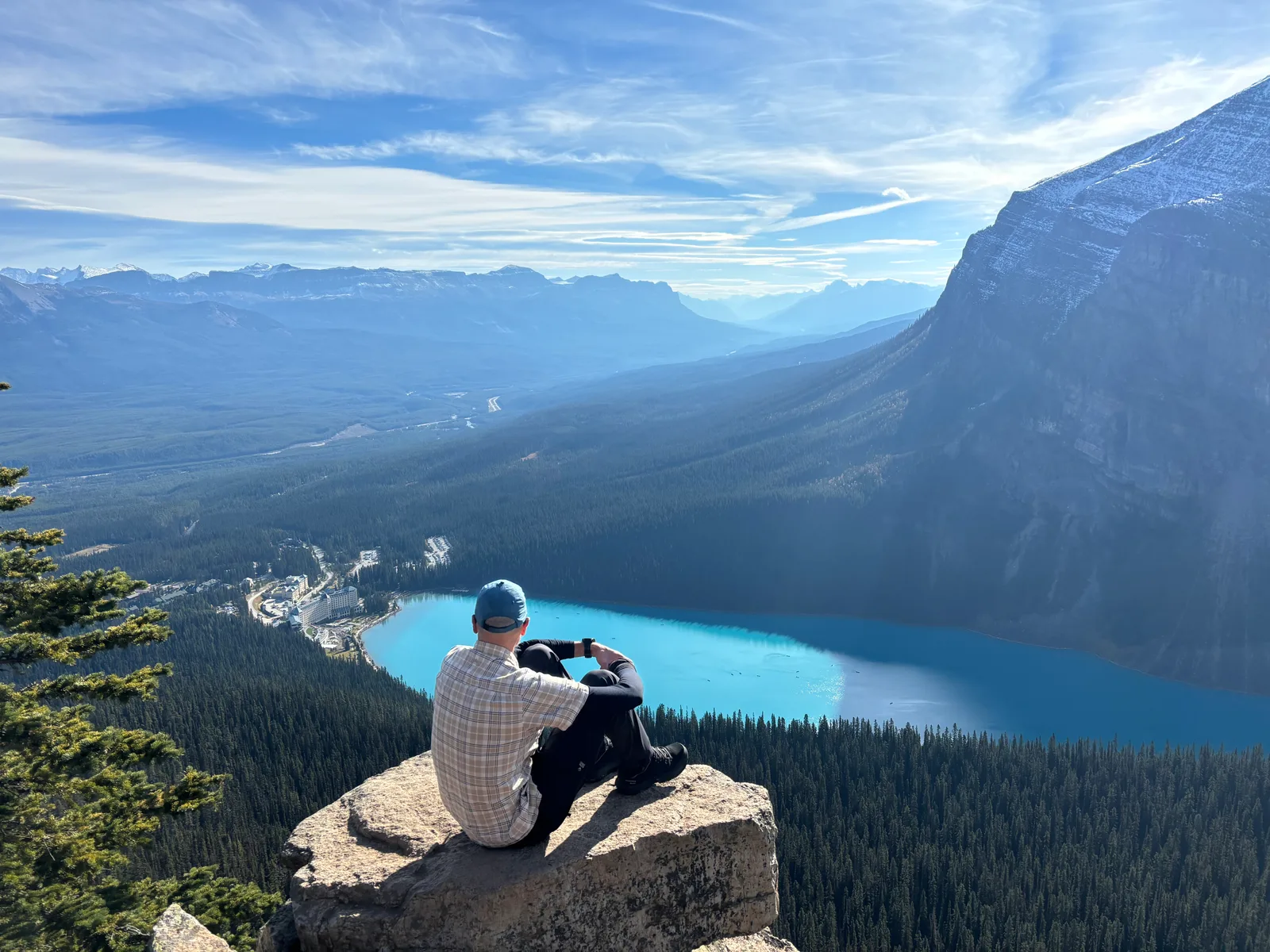
Back at Lake Agnes, we found a second trailhead, this one for the Little Beehive, which gets more direct sun and had none of the ice. It's an easier trail: gentle switchbacks, open terrain the whole way, good views of the surrounding range as you climb. It took us just 25 minutes to reach the top.
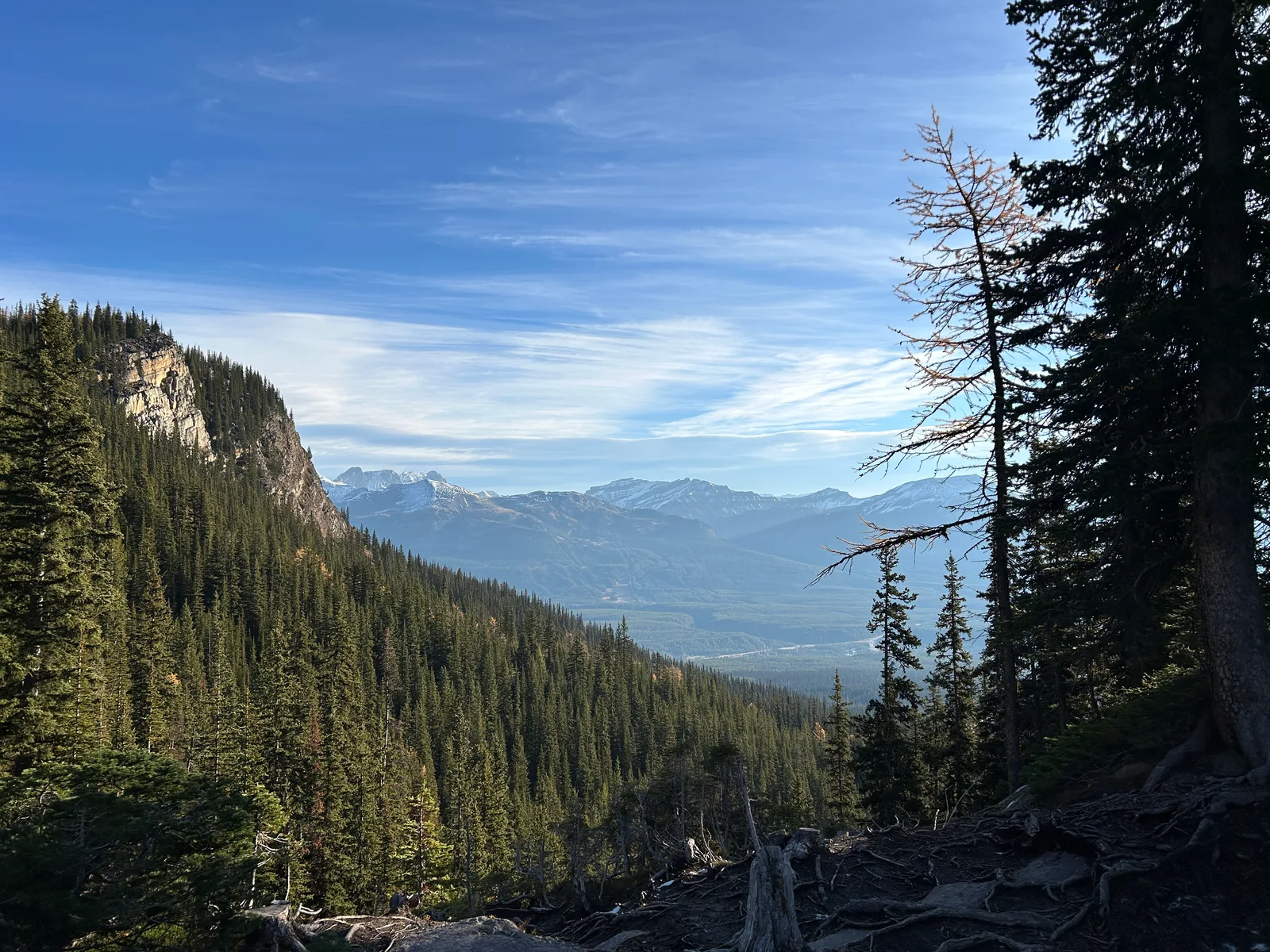
The summit view was the best of the day: Lake Louise directly below in a deep emerald colour, the whole valley laid out. We spent some time up there taking photos before heading back down.
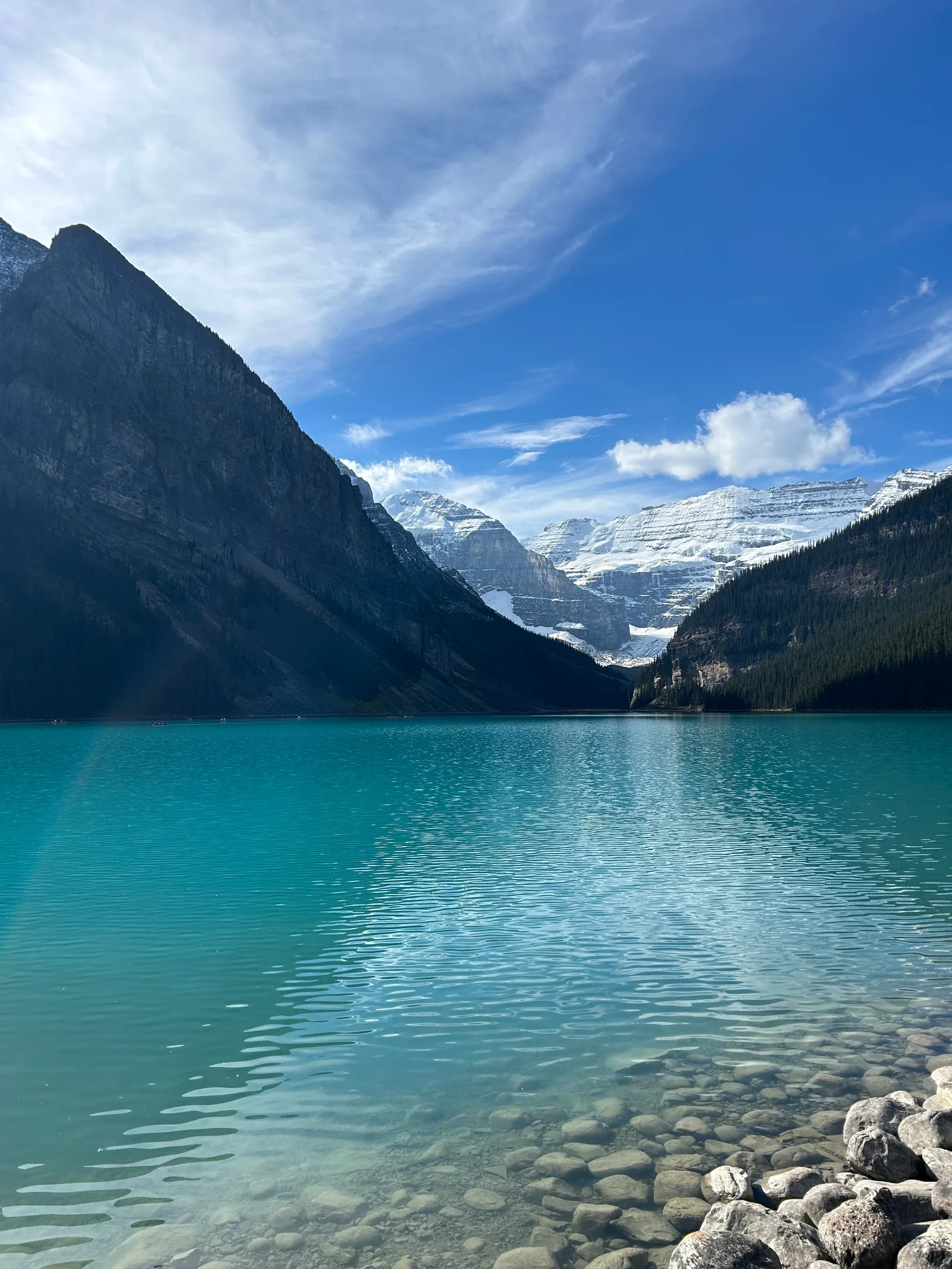
From Lake Agnes it's about 4.5 km back down to the lakeshore, which took us 1 hour 12 minutes. We got back with time for a snack before catching the shuttle onward to Moraine Lake, a separate outing on the same day.
Trail notes
- Water: no potable water sources on the trail outside the Tea House (in season). Bring what you need.
- Facilities: washrooms at the Lakeshore parking lot; pit toilets at Lake Agnes near the Tea House. Only two up there, so expect a short wait in busier months.
- Dogs: allowed on-leash on the Lake Agnes / Beehive trails.
- Crowds and timing: we had the lakeshore to ourselves arriving at 8:39am on a mid-October weekday. That early start is what got us the empty-lake photo. In July/August, expect the shuttle system under real pressure and the trail itself busy well before mid-morning.
- Safety: don't assume summer trail conditions hold into shoulder season. We hit ice on the Big Beehive approach in mid-October with zero warning from conditions lower down. Carry microspikes/traction devices from around early October through late spring, and be willing to turn back on a slippery, exposed section rather than push it.
- Cell service: spotty along the trail, but we did have coverage in some spots; don't count on it consistently.
Gear used
Nothing exotic: The North Face VECTIV Fastpack Insulated Waterproof boots, insulated water-resistant alpine pants, a merino base layer with a t-shirt over it, and an Arc'teryx rain/wind shell on top, reasonable for a 1°C start. About 15 minutes into the climb we were already overheating and stopped to shed layers. We'd packed gloves and never used them. The one real gap: no microspikes or traction device, which we needed and didn't have once we hit ice on the Big Beehive.
Lake Louise lived up to the hype on our first visit: the empty sunrise lake and the Little Beehive summit view were both worth the early start. The one thing we'd do differently: pack microspikes any time you're hiking above the lake from fall through spring, even if the day starts mild. We didn't expect to be back at Lake Louise in winter after this trip, but a frozen version of this same lake was waiting for us later on. That's a post of its own. In the meantime, the second half of this same day is over at Moraine Lake.